The material in this blog is now available at amazon.com under the title: Ideas Inspired by the Qur’an.
Before you ever thought of choosing God, GOD chose you. You had no say in the matter. You did not get to choose ‘you’. But for the grace of GOD, ‘you’ might be someone else.
(1) You could have been a poor landless Ma’anyan farm worker in Southeastern Kalimantan in the year 125. After a drought ruined the fields, you were forced to sell yourself, along with your wife and children, into slavery to redeem your debts. You never saw them again; they became the possessions of other men. A year later, you and hundreds of others, some with their families, were transported across the Indian Ocean to cut trees and clear fields in what was then virgin land – the southeast coast of Madagascar. An accident in the forest left you lame and injured, a useless burden. Starving, infected, abandoned, and forgotten, you have no one to hold your hand in these last few hours on this planet.
Would it cheer you up to know that the modern world condemns slavery in all its forms?
(2) You could have been the last Jewish merchant in the Chinese town of Ningxia in 1691. Trade has declined, and there are constant clashes between a distant government and the headstrong local tribes. Still, somehow, you have managed to hold onto the ways of your ancestors – ways that have dwindled to nearly nothing in the land. Your wife died long ago, and your daughters are married off to cousins in Kaifeng. Yesterday, though, a band of ruffians entered the town, looting and burning, including the shop you spent your whole life building up to pass on to your only son. And they took your son with them. Today you begged them to let him go. But your son himself turned to you and said, “I am glad to go – to be rid of your stupid religion and stinking shop. I told them to burn it.”
Luckily, federal laws now support protection of traditional cultures and their customs.
(3) You could have been the eight-year-old daughter of a nomadic herder in northern Tibet in 1800, when a healer visited your tent and made a great impression. You resolved to be a potent sorceress like her, and began to have amazing dreams. Your mother tried to discourage you, but you were convinced that the spirits wanted you to be their medium. While still in your teens, you picked up bits of esoteric knowledge and trafficked in spells and potions. But then your powers faded, and you were desperate to call them back. You went to lamas and hermits, and traded sex for the things that were easiest to learn, their tricks and ruses. Finally, your deceit was discovered by an old witch; she denounced you as a fraud. Now you survive on the margin of society, in ignominy and filth.
In today’s terms, however, you could be celebrated as a brave and independent woman.
(4) You could have been a handsome young Khamti man in the Namsai district of Arunachal Pradesh in 1856. You were married thirteen days ago to a beautiful girl from a nearby village, and you couldn’t be happier. Monks arrived to bless your wedding, and guests came from all over the district with gifts and good wishes. If only your mother had joined in the merriment! But now you realize why she looked so tense and apprehensive. You could not consummate your marriage! Your wife has returned to her parents, bitter and scornful of your lack of manhood. And now your mother tells you through her tears: “When you were still little, I boasted of your beauty to another woman – a sorceress, as I was later told. Perhaps she cast an evil eye on you, and this is her indelible curse.”
For the rest of your life, though, you need not worry about perpetuating patriarchal inequality.
(5) You could have been an elderly Evenk woman in eastern Yakutia in 1917. Your life in the taiga, herding reindeer and raising a family, has been hard. Recently, though, you have had time to teach your grandchildren the skills your parents taught you. On this warm summer day, you took your ten-year-old grandson to a nearby stream to spear fish. Sitting and watching on a rock, you fell asleep. Suddenly you woke to your grandson’s screams. A massive bear was standing over him, tearing at his flesh. Without pausing to think, you shouted and grabbed your rifle. But you misjudged. The bear recognized the danger you pose, and is heading straight for you. You shot once, but missed. There will be no second bullet. You too are facing your final moments on this planet.
At least you can die happy that you led an ecologically ethical lifestyle.
(6) You could have been a 26-year-old Canadian member of an aerial survey team for the 1950 expansion of the Thule Air Base in western Greenland. A sudden storm, followed by engine failure, forced you and your co-pilot to land on an ice field . . . and plunge into a crevice invisible in the blizzard. Your instruments are smashed, your radio is dead, and something has impaled your co-pilot to his seat while he thrashes about, wailing and cursing in agony. You are also losing blood, but there is no pain. In the semi-darkness you can only see that you are facing down into a black gap with steep sides and no way up. You never thought it would end like this, and so soon. You need some peace, to think, maybe to pray, but nothing comes but tears. If only your partner would shut up and die!
Your sacrifice for the military supremacy of Western capitalism will not have been in vain.
(7) You could have been born a blind, retarded girl with cerebral palsy in the Caura River basin in east-central Venezuela in 1971. Your poor Pemon mother was wont to get her drinking water and buy fish from the river, downstream from a gold mine that freely dumped its mercury. You’ve relied on her for everything; she is your only connection to the world that makes sense. But when you turned seventeen, she had no choice; your body, however deformed, is still a female body, and the young miners in the area have little choice as well. Then you are violated so often in so many ways that your life has no meaning for you. Everything in your existence is cause for shame and anguish. So when your mother finally leaves you on the side of the road, what pain have you been spared?
Never forget that you are a beautiful human being whose rights are worth protecting.
(8) You could have been a fourteen-year-old girl in a small South Dakota town in 1980. You live in a warm, stable, churchgoing community and have kind, caring parents. But you are pregnant, your boyfriend doesn’t know you any more, and you want to die. On the one hand, you could admit it all to your parents, have the baby, and . . . bear the shame and burden of a thoughtless moment for the rest of your life. On the other hand, you could have a secret abortion, and . . . bear the guilt of having murdered an innocent human being for the rest of your life. Either way, your precious chance at happiness is ruined, permanently. There’s a bridge across the river where this pain of failure can end. There’s no other way.
Never having to face, as a woman, hard choices like these – that’s progress worth dying for.
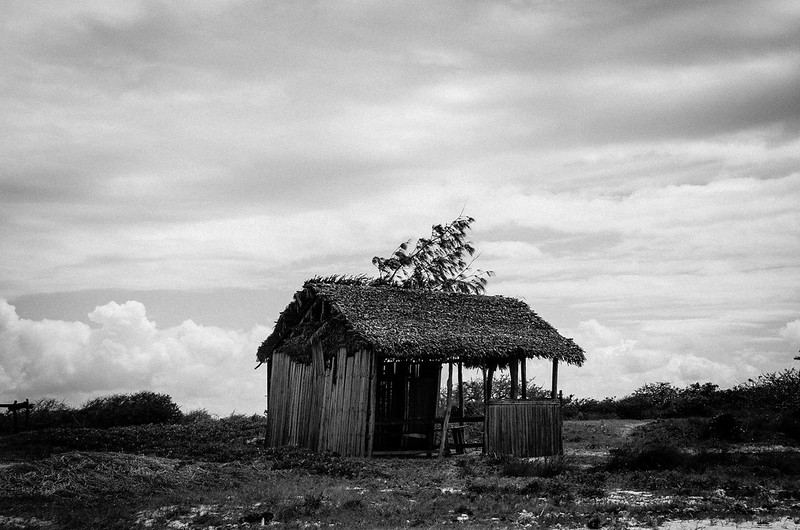
(9) You could have been a fisherman standing, weeping, on the southeast coast of Madagascar. Just an hour ago, you were in your tiny hovel, resting after a brutal workday offshore. You saw your seven-year-old son playing with a cheap plastic make-believe cellphone, and your wife said, “So, Mr. Professional, what are you going to do with that phone?” With the heartbreaking naivete of childhood, he replied, “I’m going to be a scientist!” That’s when you got up and walked out to the beach. You said those very words to your father when he asked you what your dream was, twenty years ago. And now here you are, looking out over the water your ancestors crossed 1,881 years before, and no further ahead. The chances for your grandson twenty years from now are equally bleak in this, one of the poorest countries on Earth. And despair floods your heart at the unfairness and futility of it all.
Everything happens for a reason, and through science humanity can discover those reasons.
 The GOD You Already Know