(40)
One with knowledge from the Book said, “I can bring you it before your glance comes back to you.” So when he [Sulaiman] saw it firmly set before him, he said, “This is from the favour of my Lord, to test if I am grateful or ungrateful. One who thanks is only thankful for himself; and [as for] one who is ungrateful, verily my Lord is Self-Sufficient, Honourable.”
قَالَ الَّذِي عِنْدَهُ عِلْمٌ مِنْ الْكِتَابِ أَنَا آتِيكَ بِهِ قَبْلَ أَنْ يَرْتَدَّ إِلَيْكَ طَرْفُكَ فَلَمَّا رَآهُ مُسْتَقِرًّا عِنْدَهُ قَالَ هَذَا مِنْ فَضْلِ رَبِّي لِيَبْلُوَنِي أَأَشْكُرُ أَمْ أَكْفُرُ وَمَنْ شَكَرَ فَإِنَّمَا يَشْكُرُ لِنَفْسِهِ وَمَنْ كَفَرَ فَإِنَّ رَبِّي غَنِيٌّ كَرِيمٌ
If every created thing represents a Word from GOD, then the Book is where all the Words in His creation are compiled. We are accustomed to ‘reading’ His Words one by one and in no clearly discernible order, but rather as we encounter them in this world. But suppose we could read the Book where those Words were originally composed? Would we not see more of the Power and Intelligence of the Author when laid out in sentences and paragraphs? And if the pages are pressed together, as we can imagine they are when the Book is closed, there could be juxtapositions of words from facing pages pressed against each other, as it were, suggesting interactions and coincidences that no amount of worldly knowledge could supply.
Playing with this metaphorical image is all too literal, of course, but nonetheless useful in conjecturing what knowledge from the Book could provide: a key to an alternate transcription from the Preserved Tablet to the Book of Nature, the latter being the only book that today’s scientists are disposed to read. What the stalwart from the jinn offered was no more than action within the phenomenal world as we find it written out, in longhand as it were, around us. But the one (from the race of men, according to Ibni Kathir’s sources) with knowledge from the Book offered something even quicker and more valuable, namely perception. The action, after all, was only demanded in order to produce a perception, as we shall see. Why not cut out the intermediary step and produce the perception directly, straight out of its source, from the Book itself?
I have no idea how this could actually be done, nor does any of my readers. (Or if you do, why waste your time reading my book? Write your own, and send me a copy.) The important point here, though, is that the power of Sulaiman (peace be upon him) was founded on knowledge rather than brute force. He wanted the throne to appear as a means of persuasion and education rather than a mere display of magical prowess. He needed the queen’s throne as a ‘teachable moment’, after which it, with all its irrelevant gold and gems, could be discarded. Once it appears, it is never mentioned again.
It is knowledge, once again, that prompts him to identify the Source of these blessings, namely AL-LAH, and pinpoint gratitude as the key ingredient of His creatures’ success. Erudition and ability, no matter how extraordinary, if untouched by gratitude, are ultimately disconnected from their Author and Provider and lead to states of misguidance, confusion, and corruption. It is expansive thankfulness to GOD, not our talents or powers, that benefits us in the long run. (See the Hierarchy of Values in the previous chapter; Wisdom Values such as knowledge are placed below Transcendent Values such as gratitude.) Heartfelt gratitude is naturally more prized by Al-Karim, The Honourable (or Noble), Who eagerly looks for our upward, boundless intentions far more than the pitiful limits of our learning or worldly successes. He cares more about where we are headed than what has been stuffed into our heads.
What has GOD to do with penalizing you if you are grateful and have faith? And GOD has ever been Appreciative, Knowing. (Q4:147)
مَا يَفْعَلُ اللَّهُ بِعَذَابِكُمْ إِنْ شَكَرْتُمْ وَآمَنْتُمْ وَكَانَ اللَّهُ شَاكِرًا عَلِيمًا
(41)
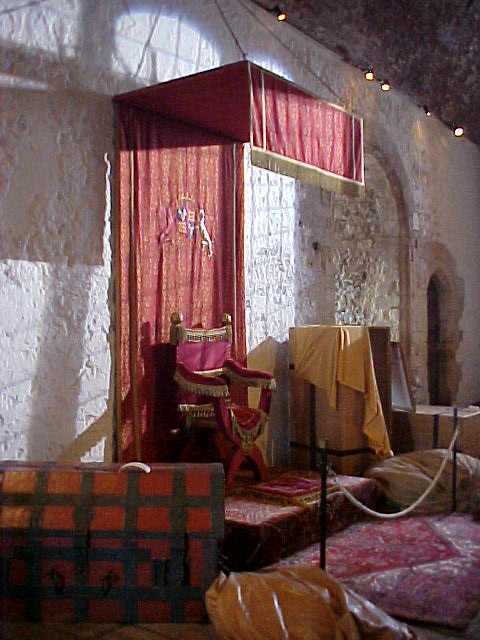
He said, “Disguise her throne for her that we might see if she will go aright or is among the ones who are misguided.”
قَالَ نَكِّرُوا لَهَا عَرْشَهَا نَنظُرْ أَتَهْتَدِي أَمْ تَكُونُ مِنْ الَّذِينَ لاَ يَهْتَدُونَ
What particular alterations were made to the throne are not specified in the Qur’an, and are of no significance here. The focus should be on 1) what is chosen for the change, and 2) the fact of the change itself. Both are instrumental in altering the queen’s state of mind.
Why did Sulaiman (peace be upon him) summon his nobles to bring her throne to me if his only purpose was to demonstrate his extraordinary knowledge or majesty? With such power as he possessed, he could have produced almost anything and then altered its appearance, as the magicians of Fir’aun were able to do with their staves and ropes that were made to look like serpents. The answer, of course, is that he had that particular thing transported because it was hers, and because of what it represented for her.
Sulaiman (peace be upon him) engages her attention by working with something that is familiar to her, and to which she is emotionally attached. One might even say that her throne is the centre of her world; it symbolizes her authority, which in her mind is the basis of her power and well-being. Rather than expounding some theological theory to her (which is what I, lacking his power, might have to do), he uses a concrete example – always a better pedagogical option. The student ‘sees’ what is meant rather than merely ‘hearing’ (or reading about) it. And if the example chosen ‘belongs’ to the student, then how much more potent is the lesson!
The active intellect is able to identify what the confused intellect takes to be its authority and works with that. The confused intellect always bases its right to govern the other members of its ‘kingdom’ on a claim that is false, which in this case is that the sun is worthy of worship. Translated into modern terms, we could call it the belief that power, utility, pleasure, and/or survival are sufficient reasons for living in this world, for surrounding ourselves with supporters, and for instituting an intellectual regime that dominates the spirit and yet fears the intrusions of other kings.
The queen’s throne, i.e., the authority of the confused intellect, is altered so that she cannot unreservedly say ‘That is mine.’ She can see that her throne is either changeable or reproducible in detail, thus diminishing her sense of control and ownership. The authority that stands for the heart and purpose of her existence now appears to be at the mercy of a higher power. Is it even hers anymore?
Faced with this challenge, the queen has two ways out. She can refuse to recognize the basic similarity, reject the lesson being offered, and simply say, ‘It is not exactly the same; my throne is back home where I left it, and this is a trick, a counterfeit.’ She can, in effect, assert that things like her throne do not change. If a change is observed, what we have is a new and different thing. Such an assertion would supposedly maintain her legitimacy, insofar as the throne is both a thing and a symbol of her power and authority. The popular belief, however, is that things do change, and by opposing that common-sense view of the matter, she would be relegating her authority to the shrunken realm of the distant and irrelevant.
A second option is to accept the throne as presented, regardless of the changes made to it or the fact that it was transported and altered without her knowledge. In that case, however, she would be admitting not only that things change, which is true enough, but also that her authority itself can be changeable. Yet it is clear that an authority so easily subject to external forces is no longer reliable or worthy of respect. None of us gladly accept our authority changing except under some external pressure or attraction, i.e., some higher authority. The queen could call it her throne, but she would be unable to set a limit on where or how its identity and integrity might be further impaired. Her possession of it, meanwhile, would be both disputable and vacuous.*
Either of these ‘ways out’ would be a failure for her, an instance of a lesson not learned but lost – in other words, misguidance.
* A few modern examples should help clarify this matter of the queen’s two possible responses to her altered throne.
An American who believes the Constitution with all its amendments is sacred, a European who longs for the days when kings ruled by divine right, or a Catholic who swears by Papal infallibility could each be considered as hanging onto a worldly legitimacy that ought to be impervious to change.
The alternative is much in favour these days – a vision of authority based on a shape-shifting, kaleidoscopic ‘consensus’ on what is right and wrong or true and false . . . from feminism to gay rights to reverse racial discrimination to gender fluidity.
Either of these ‘ways out’ would be a failure for her, an instance of a lesson not learned but lost – in other words, misguidance.
 The GOD You Already Know