The material in this blog is now available at amazon.com under the title: Ideas Inspired by the Qur’an.
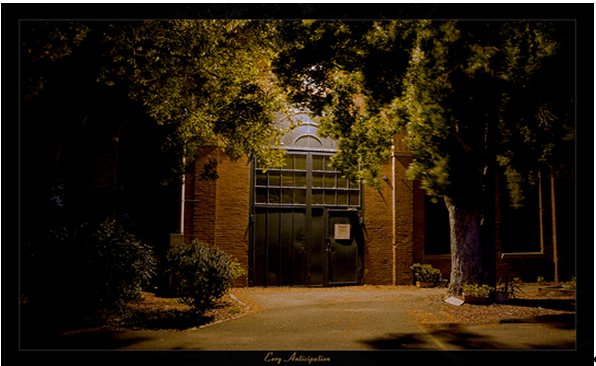
ANTICIPATION
From death to breath to death we move, unseeing.
We do not lead our lives – nay, disagreeing,
We must be led, pulled into life complaining.
Each step reveals another gate remaining.
So schooled to trust, we haply learn, before
We reach the final door, to fear no more.
Just before launching into His narrative, AL-LAH strikes a note of incredulity (Q2:28) at the existential folly of those who reject Him.
How can you reject [or be ungrateful to] AL-LAH, when you were dead and He gave life to you? Then He will make you die, then make you live, and unto Him then you will be returned.
كَيْفَ تَكْفُرُونَ بِاللَّهِ وَكُنتُمْ أَمْوَاتًا فَأَحْيَاكُمْ ثُمَّ يُمِيتُكُمْ ثُمَّ يُحْيِيكُمْ ثُمَّ إِلَيْهِ تُرْجَعُونَ
Each one of us represents a reality greater than our experience of it. We came from a time before memory, by the favour of One we cannot comprehend, into a domain that defies all reason – life – and are heading for a loss that we loathe and a life beyond that makes no sense to deny, given the incredible one we have now. All this eventfulness and movement, and yet here we sit – unmoved!
It is as if, having occurred without our explicit consent and close control, this entire sequence is somehow undeserving of our trust, not to mention gratitude. The verb takfuruna, which I have translated as reject, also carries the meaning of being ungrateful. Underlying this implicit dissent on our part is a deeper unease – fear of the unknown. Consequently AL-LAH goes on (Q2:29) to reassure us of not only what He has already done with our interests in mind – made for you all that is on earth – but also what awaits us in other realms of which we, once again, are yet unaware.
He is the One Who made for you all that is on earth. Then He attended to the sky and formed them into seven heavens. And He is the Knower of all things.
هُوَ الَّذِي خَلَقَ لَكُمْ مَا فِي الأَرْضِ جَمِيعًا ثُمَّ اسْتَوَى إِلَى السَّمَاءِ فَسَوَّاهُنَّ سَبْعَ سَمَاوَاتٍ وَهُوَ بِكُلِّ شَيْءٍ عَلِيمٌ
The higher realm, however much it may indicate some physical array subsequent to all that is on earth, is associated both with returning (Q86:11) and with levels of knowledge. It is to that Knowledge we must turn if we are to discern the outlines of the hidden reality (ghaib), or secret (sirr) of the heavens and the earth.
(30)
And [consider] when your Lord addressed the angels, “Verily I am the Maker of [or am making] a deputy on earth.” They asked, “Will You make there those who cause corruption there and shed their blood, while we are glorifying You with praise and honouring Your Holiness?” He answered, “Verily I know what you know not.”
َإِذْ قَالَ رَبُّكَ لِلْمَلاَئِكَةِ إِنِّي جَاعِلٌ فِي الأَرْضِ خَلِيفَةً قَالُوا أَتَجْعَلُ فِيهَا مَنْ يُفْسِدُ فِيهَا وَيَسْفِكُ الدِّمَاءَ وَنَحْنُ نُسَبِّحُ بِحَمْدِكَ وَنُقَدِّسُ لَكَ قَالَ إِنِّي أَعْلَمُ مَا لاَ تَعْلَمُونَ
AL-LAH converses with all His creatures, and not only with a select few – the messengers and prophets, of course, but also with the mother of Musa, with mountains, and with bees, for example. With each group or individual He reveals different aspects of His Personality; indeed, one could say that the differences in what He reveals to them are what make them different. His first word to them – “Be!” – may mean something unique to each unique recipient.
To the angels, who are creatures of light, He reveals a particular kind of knowledge. It is the knowledge obtained by light, namely vision, and is appropriate to their natural home, which is the heavens (Q53:26). Hence they can ‘see’ what humanity will do on the earth – cause corruption there and shed their blood. Likewise, it is because they ‘see’ GOD as Light that they worship and obey Him. But they also see that the Holiness they revere is in stark contrast with the apparent future of humanity, and so they pose their question, out of perplexity from this apparent conflict.
The knowledge obtained from visible light alone, however, is not the supreme knowledge, as I explained earlier in Chapter 36, ‘Under the Street Lamp’. A reality based solely upon such light will turn out to be much like the scientism we are faced with nowadays – materialistic, superficial, inclined to see persons as things, overconfident, and grossly unaware of its own limitations. Through no fault of their own, the angels are missing a vital element that AL-LAH is about to supply through another creation, namely man.
That they are unaware of this defect is evident in the way they phrase their question. They ask, Will You make there . . . ? which captures less than half of what AL-LAH intended when He said Verily I am the Maker . . . . In Arabic, their inquiry takes the form of the present or future indicative tense – taj’alu – signifying the action of making or placing. But GOD’s initial statement contains the deeper meaning embedded in using a gerund – ja’ilun – which functions as both a verb, i.e., making [or placing], and a noun, i.e., Maker [or Placer]. This is, therefore, not just a matter of what GOD will do in the phenomenal realm, which is visible to them, but also of Who He is, which is mainly invisible. He is not only telling the angels what He plans to do, but also expressing a hidden aspect of His Identity that hints at why He is doing it.
The previous verse ended with And He is the Knower of all things. The connection with knowledge is carried over into this verse. His first words to the angels are Verily I . . . , emphasizing an essential characteristic of GOD Himself. At the end of the verse, speaking of His Knowledge again, He repeats this phrase, Verily I . . . With this repetition, one realizes that the first statement – I am the Maker of a deputy on earth – was also meant to express His Knowledge, but in the form of verum factum, by which knowing is coincident and identical with creation, or that truth becomes so by making it, a principle championed by the philosopher Giambattista Vico.1 Every act of GOD is His Knowledge made visible. The knowledge in that act, however, is hidden by the dazzling brilliance of the act itself – Light upon Light! (Q24:35)
(31)
And He taught Adam all the names, then showed them to the angels, saying “Tell Me what the names of these are if you have been truthful.”
وَعَلَّمَ آدَمَ الأَسْمَاءَ كُلَّهَا ثُمَّ عَرَضَهُمْ عَلَى الْمَلاَئِكَةِ فَقَالَ أَنْبِئُونِي بِأَسْمَاءِ هَؤُلاَء إِنْ كُنتُمْ صَادِقِينَ
What distinguishes Adam (peace be upon him) at this juncture is not the specific details of his creation. We are told in Q32:9 (and similarly in several other verses) that He formed [or He proportioned] him [the human being] and breathed His spirit into him, but it is clear from the context of various other verses that the angels and the jinn are also ‘spirited’ beings. The composition of man from clay and water is unique, no doubt; that uniqueness, however, is not emphasized here, but only hinted at by the phrase from the previous verse – on earth (which in Arabic is literally in the earth). Rather the reason for humanity’s distinction is explicitly stated here – He taught Adam all the names.
The word taught in English conceals the very significant use of a word based on the same root – ‘-l-m – as what is used for know in the previous verse and Knower before that. A more literal translation – but one somewhat clumsy in English – would read He gave to Adam knowledge of all the names. The same attribute that characterizes the formation of the heavens and the earth, namely knowledge, is highlighted here as GOD’s distinctive contribution to man. If AL-LAH created both the heavens and the earth with truth (Q45:22), then that assertion particularly applies to humanity as well, given that truth is not only something he obtained by being part of the earth but also what he was specifically taught.
This focus on truth takes on added meaning in light of His remark to the angels at the end of the verse – if you have been truthful. The implication in this is that the angels have unknowingly missed an important aspect of not only knowledge but truth itself by failing to see the special relationship between GOD as Knower and Maker on the one hand and one whom He has deliberately named as deputy. As a deputy on earth, man is being given a capacity that the angels in heaven cannot grasp – the power of naming.
Various commentators have offered their opinions on what names are meant here. By merely saying all the names, however, AL-LAH is deliberately broadening the meaning of the expression to the maximum extent. This intentional lack of focus is reinforced by the use of an ambiguous these in the names of these. It is clear enough that the identity of these is not an issue; rather the focus is on the general ability to give names to things. Why is this significant?
Naming is nothing less than the ability to manipulate reality. We like to think that reality is physical, and more like a solid than a liquid or a gas. It should, we think, be as stable as the earth we stand on – measurable, objective, and free of bias or point of view. Names, on the other hand, introduce all sorts of subjectivity into the arena of thought. Like clouds, they move and change, have depth and height, are vaguely defined, and act in ways that are unpredictable, are largely unquantifiable, and can be diversely interpreted. Names correspond to our own ambiguous character as humans.
We live in a world in which subjects master objects. (And if a king, the principal subject of the realm, has ‘subjects’ – courtiers and serfs, for example – he treats them as objects who are ‘subjected’ to him.) The very heartbeat and lifework of the scientist is engaged in precisely this, namely mastering the objects of his observation and study. And for every object of thought he discovers or proposes, he must assign a name. It is by the act of naming that he puts his seal of human ownership upon it. This position of control has been assigned by Divine Design (Q14:32-33):
AL-LAH is He Who made the heavens and the earth, and sent down water from the sky to bring forth from the fruit provision for you. He subjected unto you the ship that it might travel on the sea by His Command, and He made streams subservient to you. / And He subjected unto you the sun and moon, continuously orbiting, and made the night and day subservient to you.
اللَّهُ الَّذِي خَلَقَ السَّمَاوَاتِ وَالأَرْضَ وَأَنزَلَ مِنْ السَّمَاءِ مَاءً فَأَخْرَجَ بِهِ مِنْ الثَّمَرَاتِ رِزْقًا لَكُمْ وَسَخَّرَ لَكُمْ الْفُلْكَ لِتَجْرِيَ فِي الْبَحْرِ بِأَمْرِهِ وَسَخَّرَ لَكُمْ الأَنهَار
وَسَخَّرَ لَكُمْ الشَّمْسَ وَالْقَمَرَ دَائِبَيْنِ وَسَخَّرَ لَكُمْ اللَّيْلَ وَالنَّهَار
Everything on earth, as well as the sun and the moon, is made for us and subjected to us (which does not absolve us of any abuses we commit). What facilitates that control? Intelligence – the capacity to name something, to rename it, and thus to ‘handle’ it in an unearthly place beyond the normal limitations of space and time. It is, as I mentioned in Chapter 37 with reference to the kingdom of Sulaiman (peace be upon him), the kind of dominion we all exercise in our minds over our thoughts. This godlike power, given to Adam (peace be upon him), was unlike anything the angels had ever seen before.
1 Copleston, A History of Philosophy, Volume VI, p. 156
 The GOD You Already Know