THE SYNTHETIC SELF
The question posed by death is: What are you really believing when you believe in yourself?
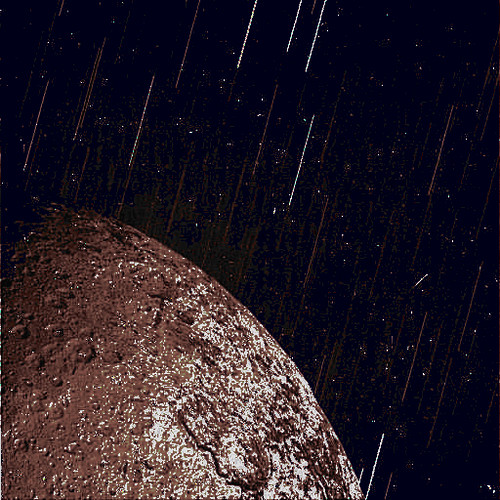
An answer that immediately springs to my mind is ‘coincidence’ – a concurrence of multiple events. Like a proto-planet that, over time, attracts accretions as it wends its way through the dust and grit of interstellar space, a life begins with a vague impression of where it is and a set of imperative needs and wants. Through the two-handed sculpting of pains and pleasures, it learns to own its desires and aversions, to influence its environment, and to interact with other lives.
The signals coming to it from the body and from the environment make no sense by themselves; they must be reinterpreted or patterned into units of meaning before they can be assimilated to previous impressions. The feeling it acquires of an independent self is not an a priori fact, a Cartesian ‘truth’, but rather comes into play as the spine of its experience – the earliest, easiest, most reassuring, and most frequently reinforced assumption on which everything else it senses is founded. Like the first grain of dust around which an entire planet gathers by the force of gravity, a self starts out as little more than a mathematical point, a seminal act of meaning to which other units of meaning became attached by a process of mutual affirmation.
But the original ‘you’, a drop of sperm fertilizing an egg in a womb, is not what you would call yourself now. Those layers of addenda in the shape of processed experiences and configured concepts have been parleyed into a self that encompasses multiple roles, such as child, sibling, parent, colleague, citizen, bystander, commuter, consumer, and so on, and selects memories and goals on an interim and adaptive basis. Each accretion must ‘fit’ if it is to become a part of you, and once attached, it adds a new wobble to your orbit and a revised definition of who you are even as it strengthens the underlying structure of self. Successes harden this assumed persona, and setbacks, failures, diseases, and disasters, like meteor showers, challenge it, reformulate it, or even break it apart. And all of these events, from the primal confluence of sperm and egg through to your latest artistic achievement or career milestone, occurred as products of circumstances and powers usually or totally beyond your control or even consciousness. In other words, you still are, and have always been, at the mercy of unfathomable decrees of fate. You are a process, not a single, settled entity.
You have accumulated too much, for too long, and in ways that you cannot begin to remember, to know all there is to know about you. When you consider yourself, you do not look from a global or comprehensive perspective; rather you select some aspects of that conglomeration that meet your temporary need for a ready image. Others see you differently – not as thoroughly, perhaps, for they lack the interest in you that you have, but with the same fragmentary approach. And that applies to everything else in your world. You do not see the tree in your back yard; rather you construct a rudimentary approximation of that tree for practical purposes and ‘work’, in your mind, with that. The real tree is far too overwhelming for you to handle, like the mountain that crumbled before Musa when the Light of GOD revealed every particle of it and caused him to swoon away in holy terror (Chapter 2).
Your entire experiential apparatus operates not to provide high-resolution fidelity but symbolic, associative, and workable abstractions from your experiences. What counts are the connections, not the details. Your whole world-picture, your very life as you feel it, is a swarm of emotions, images, and ideas hovering over a landscape of terrible clarity, a land which for you to touch now is to die. This cloud has condensed around the comfort zone of your earliest days on Earth, in conditions of epoch, place, class, and culture that defined what you think to be yourself before you could even think. You are not so much aware of yourself as accustomed to a narrative constantly being adjusted to cope with the feedback that you admit to maintain that narrative, or with experiences that break in upon you and devastate you until a tolerable revision can be concocted. That equivocal, unstable cloud of impressions is your world, offering only glimpses of excruciating realities below and magnificent serenities above. Your self was made there, along with everything else you think you know or believe.
Know that this worldly life is play, amusement, decoration, boasting to each other, and contending for pre-eminence in wealth and children, like a downpour that amazes farmers by the vegetation it produces, then it dries – you see it turning yellow – then it turns to scrap. And in the Everafter are a forceful castigation and forgiveness and approval from AL-LAH. This worldly life is nothing but enjoyment of illusion. (Q57:20)
اعْلَمُوا أَنَّمَا الْحَيَاةُ الدُّنْيَا لَعِبٌ وَلَهْوٌ وَزِينَةٌ وَتَفَاخُرٌ بَيْنَكُمْ وَتَكَاثُرٌ فِي الأَمْوالِ وَالأَوْلاَدِ كَمَثَلِ غَيْثٍ أَعْجَبَ الْكُفَّارَ نَبَاتُهُ ثُمَّ يَهِيجُ فَتَرَاهُ مُصْفَرًّا ثُمَّ يَكُونُ حُطَامًا وَفِي الآخِرَةِ عَذَابٌ شَدِيدٌ وَمَغْفِرَةٌ مِنْ اللَّهِ وَرِضْوَانٌ وَمَا الْحَيَاةُ الدُّنْيَا إِلاَّ مَتَاعُ الْغُرُورِ
So to the question ‘Who am I, really?’ death, the ever-present prompter, suggests this response, ‘You are a construct, an act of imagination. You may look reliably solid and complete, but that façade, with all its empty materialistic fallacies, is as nothing compared to its effect. These props and sets, which took years to prepare, will take only seconds to dismantle. But the performance that they were made for – what a show!’
In the theatre of the Everafter, it does not matter that the actors – the various personae who somehow present a semblance of dramatic unity night after night – are two-bit players whom we would never recognize in their street clothes. Nor do we care whether their stage costumes are bought or borrowed, or whether the props are made of real wood or cardboard. All that counts are the quality of the acting and its faithfulness to the script. These are the realities we look and strive for. And only these truly justify our faith.
Do they exist? What about existence – does it exist? These Aristotelian categories of substance and accident, of universals and particulars, belong to another era, another stage in the growth of the human epic. All that matters is – what have you constructed? What is your story? What are you telling yourself and others? What do your actions say about what you really believe?
And say, “Work, and GOD will see your work, and so too will the Messenger, and the believers. And you will be returned to One Who Knows the hidden and the manifest, and He will tell you what you used to do. (Q9:105)
َقُلْ اعْمَلُوا فَسَيَرَى اللَّهُ عَمَلَكُمْ وَرَسُولُهُ وَالْمُؤْمِنُونَ وَسَتُرَدُّونَ إِلَى عَالِمِ الْغَيْبِ وَالشَّهَادَةِ فَيُنَبِّئُكُمْ بِمَا كُنتُمْ تَعْمَلُونَ
 The GOD You Already Know